What you need to know:
- Barbados luxury rental yields typically range from 4–8% gross, with well-managed West Coast properties achieving 7–10% and South Coast condo-hotels offering structured returns through pooled revenue models.
- Two ownership models dominate: condo-hotel programmes (managed, three months personal use, revenue split) and self-managed freehold (full flexibility, higher upside but owner-coordinated logistics).
- The island recorded 727,000 stay-over visitors in 2025 — a national record — with 72% average hotel occupancy and 68% short-term rental occupancy providing the demand foundation.
- No capital gains tax, Tourism Development Act incentives, and progressive rental income tax rates (first BDS$25,000 / US$12,500 personal allowance) form the fiscal framework.
What Rental Income Can You Realistically Expect in Barbados?
Barbados rental yields typically range from 4–8% gross annually, with professionally managed luxury properties achieving higher returns — though net yields after management fees, maintenance, and taxes run 1.5–3 percentage points lower than gross figures.Gross vs net yield explained
The distinction matters more than most Barbados property marketing acknowledges. Gross yield is the simple calculation: annual rental income divided by purchase price. A US$500,000 property generating US$35,000 in annual rental revenue produces a 7% gross yield. But that number is meaningless for investment planning because it excludes every cost between revenue and your pocket.Net yield subtracts management fees (8–12% of rental income for self-managed properties, or built into the revenue split for condo-hotels), land tax, insurance, maintenance reserves (typically 1–3% of property value annually), club memberships where applicable, and income tax. A 7% gross yield commonly resolves to 4–5% net.In our experience advising investors across both coasts, the single biggest factor separating profitable and break-even Barbados rentals is management quality — the difference between average and excellent property management can be 2–3 percentage points of annual yield.Barbados market benchmarks
Current market data provides useful anchors. Airbtics reports a median annual revenue of US$42,000 across Barbados short-term rentals, with an average daily rate of US$167 and 68% occupancy. That median includes everything from modest apartments to luxury beachfront villas, so the figure understates what purpose-built resort properties typically generate.At the luxury end, CMC Global Estates' 2026 analysis indicates well-managed luxury properties achieve gross yields of 8–9% per annum, with short-term rental configurations pushing above that in peak season. Chestertons' 2026 investment guide places West Coast vacation rental yields at 4–7%, with premium properties exceeding that range. The important caveat: published yield figures vary widely by source, methodology, and time period. Treat any single number as indicative, not predictive — and always clarify whether a quoted yield is gross or net.How Do Managed Condo-Hotel Programmes Compare to Self-Managed Rentals?
Condo-hotel programmes offer hands-off income with a transparent cost structure, while self-managed properties offer full revenue control but require owner-coordinated management, marketing, and maintenance. The right choice depends on how involved you want to be.Condo-hotel model: The Sands, O2, The Crane
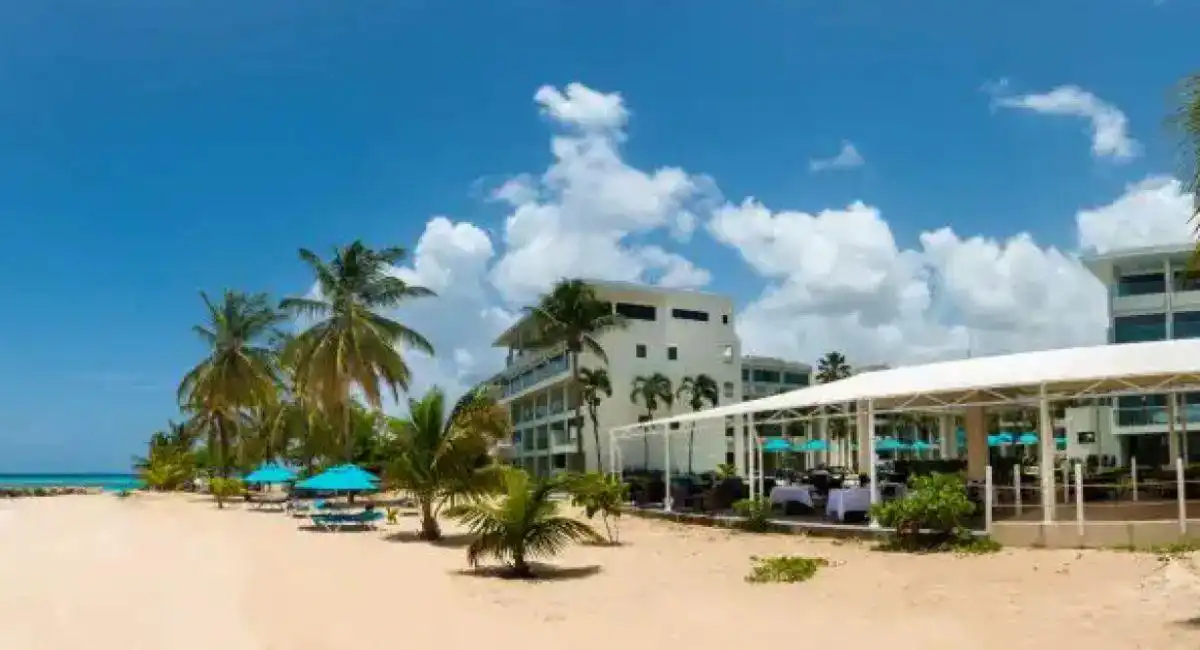
Three South Coast and East Coast developments operate structured condo-hotel programmes:The Sands runs a pooled revenue model with a published 47.5/47.5/5 split — 47.5% to the owner, 47.5% to management, 5% to a furniture, fixtures, and equipment reserve. Studios start from approximately US$273,000 / BDS$546,000 as of July 2026. Owners receive three months of personal use; the remaining nine months enter the resort's all-inclusive rental pool. Quarterly statements, annual payments.O2 Beach Club offers two ownership models: a condo-hotel arrangement (three months personal use, managed rental for the remainder) or full freehold with optional rental participation. One-bedroom units start from approximately US$426,000 / BDS$852,000 as of July 2026. The resort's all-inclusive operation runs through tour operators, OTAs, and direct bookings.The Crane Private Residences Phase 4 offers studios from US$349,000 with a notable differentiator: guaranteed annual returns for the first four years post-delivery (expected 2028). Full freehold ownership with no usage restrictions. The Crane's established reputation and five-pool resort complex support its rental positioning.The structural advantage of condo-hotel programmes is transparency — you know the revenue split before you buy. The limitation is ceiling: your income is capped at your share of pooled revenue, regardless of how strong the season is.Self-managed freehold: Royal Westmoreland, Apes Hill, St Peters Bay
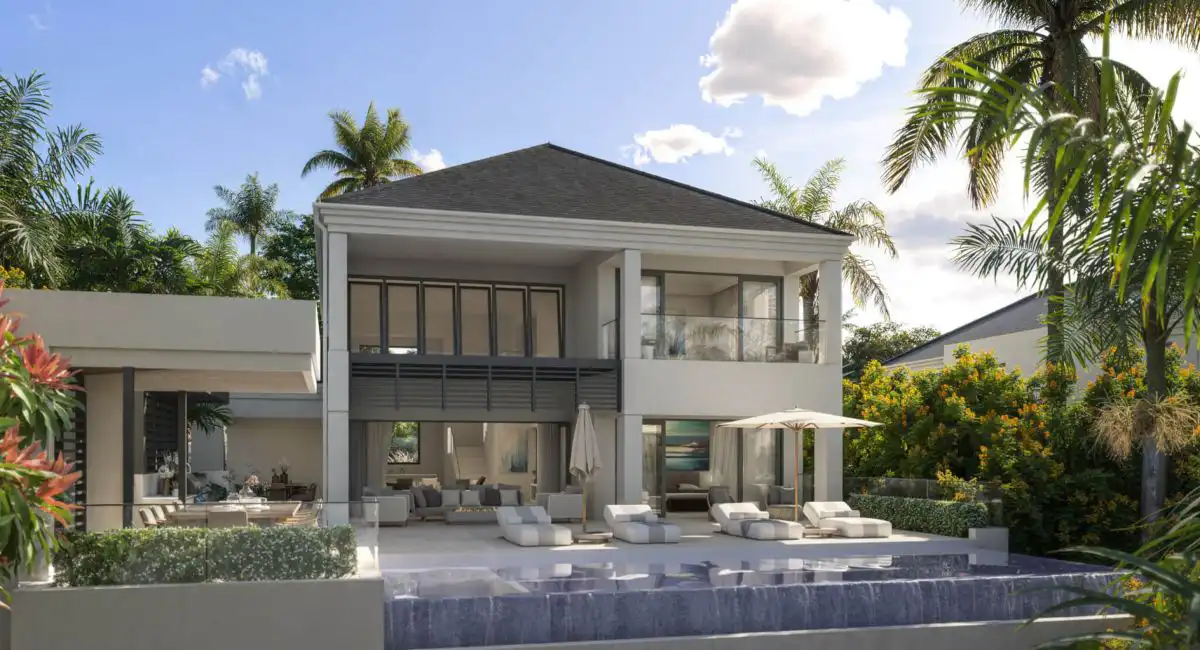
At the other end, luxury resort communities offer freehold ownership with full control over rental strategy:Royal Westmoreland is a gated golf community on the West Coast where owners rent villas through independent management companies or directly. CMC Global Estates' analysis indicates a 9.8% indicative yield for the community — the highest published figure among named Barbados developments — though this reflects gross returns before management and membership costs.Apes Hill is an inland golf and beach club community requiring a US$200,000 initiation fee (included in developer pricing) and US$20,000 annual membership. Properties range from design-build lots to turnkey villas. Owners manage their own rental strategy, with the club's two golf courses, beach club, and performance centre supporting rental appeal.St Peters Bay sits on the West Coast's Platinum Coast with luxury apartments (a three-bedroom listed at US$1,600,000 on Residence Barbados). Concierge and property management services support rental operations, but the income model is owner-directed rather than pooled.Choosing between them
Buyers we work with consistently underestimate ownership costs when calculating expected returns — land tax, insurance, maintenance reserves, and club memberships can reduce a 7% gross yield to 4% net before income tax. The condo-hotel model makes these costs visible upfront; the self-managed model requires you to discover them.If you want predictable, hands-off income and are comfortable with a capped upside, the condo-hotel structure suits. If you want maximum control, are prepared to invest in excellent property management, and can absorb the operational complexity, self-managed freehold offers a higher ceiling.For a direct comparison between the managed and self-managed models, see our guides on comparing The Sands and Apes Hill and the Crane vs Apes Hill comparison.How Does Location Affect Rental Returns — South Coast vs West Coast vs East Coast?
The South Coast delivers higher occupancy across a longer season at moderate nightly rates; the West Coast commands premium rates but with more pronounced seasonality; the East Coast offers lower entry prices and an emerging tourism profile.South Coast demand drivers
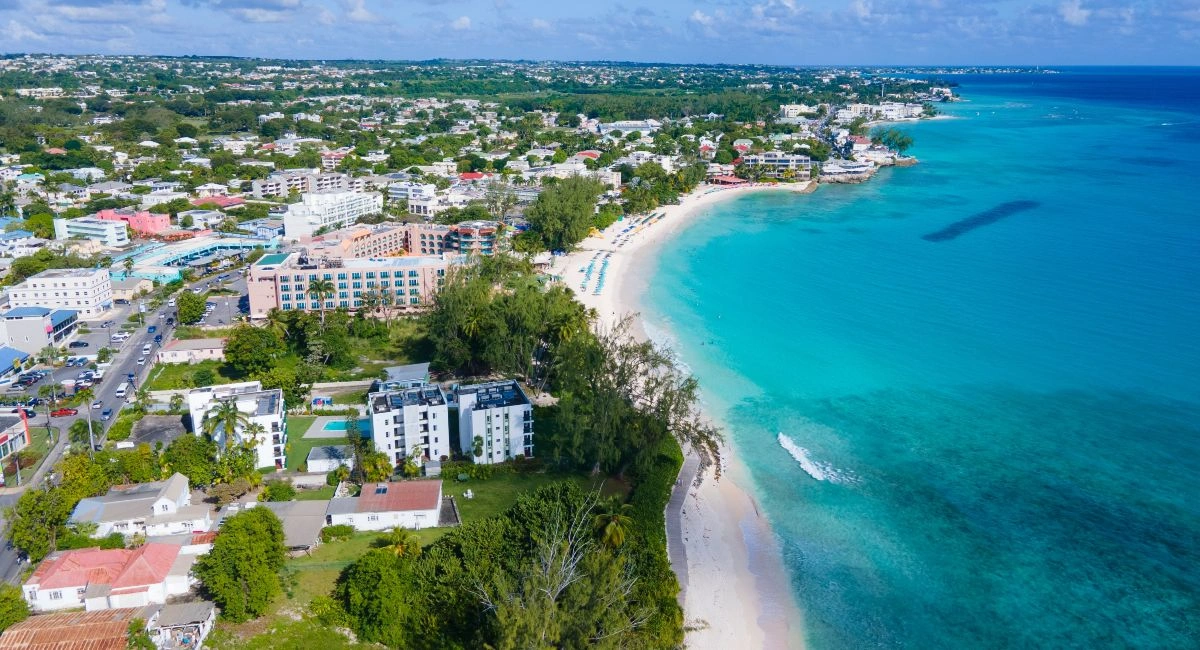
The South Coast — primarily Christ Church parish — is what Chestertons' 2026 guide calls the "sweet spot" for short-term holiday rentals. Modern apartments, managed condos, and a lock-up-and-leave lifestyle attract families, couples, and the growing digital-nomad demographic.Demand drivers are structural: Grantley Adams International Airport is approximately 15–20 minutes by car. St Lawrence Gap provides the island's densest dining and nightlife corridor. The South Coast lifestyle is walkable and accessible — guests can arrive and function without a rental car, which matters for short-stay bookings.The condo-hotel developments here (The Sands, O2) benefit from lower entry prices, which improve yield mathematics. A US$273,000 studio generating moderate rental income produces a higher percentage return than a US$1.5 million West Coast villa generating proportionally more revenue.West Coast premium positioning
The West Coast — St James and St Peter parishes, known as the Platinum Coast — commands Barbados's highest nightly rates. HOPE Research Group reports Barbados hotel ADRs of US$250–400, with the West Coast commanding the upper end. Short-term rentals on the West Coast can achieve yields between 7% and 10% according to Chestertons' analysis.The trade-off is seasonality. West Coast properties depend more heavily on the December–April peak season, with occupancy dropping more sharply in the summer months than South Coast properties. This concentration means strong annual revenue is possible but less evenly distributed.Royal Westmoreland, Port Ferdinand (a marina luxury residence community), and St Peters Bay all sit in this premium corridor. The buyer profile is different: higher net worth, longer average stay, and greater willingness to pay premium nightly rates — but the properties also require higher capital investment.For a detailed comparison of buying locations, see our West Coast vs South Coast buyer guide.East Coast emerging market
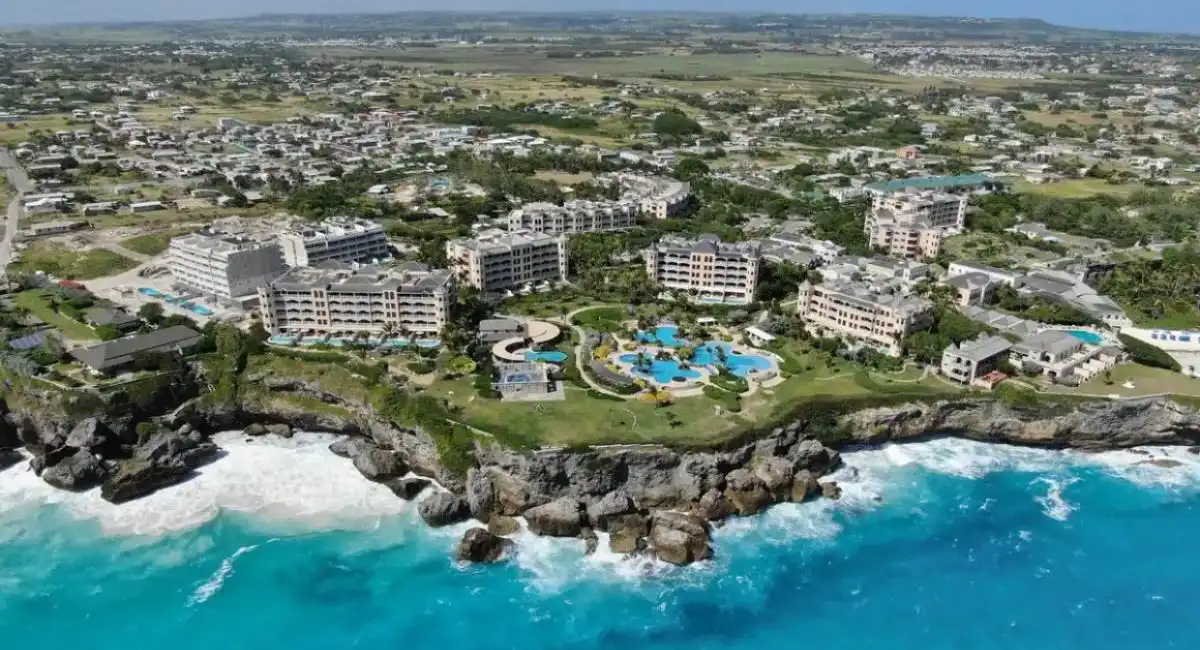
The East Coast — centred on The Crane at the southeastern tip — offers lower entry pricing and a more rugged, surf-facing character. Short-term rental infrastructure is less developed than either coast's established corridors, but The Crane's established resort operation demonstrates that East Coast properties can generate rental income when backed by institutional-grade management.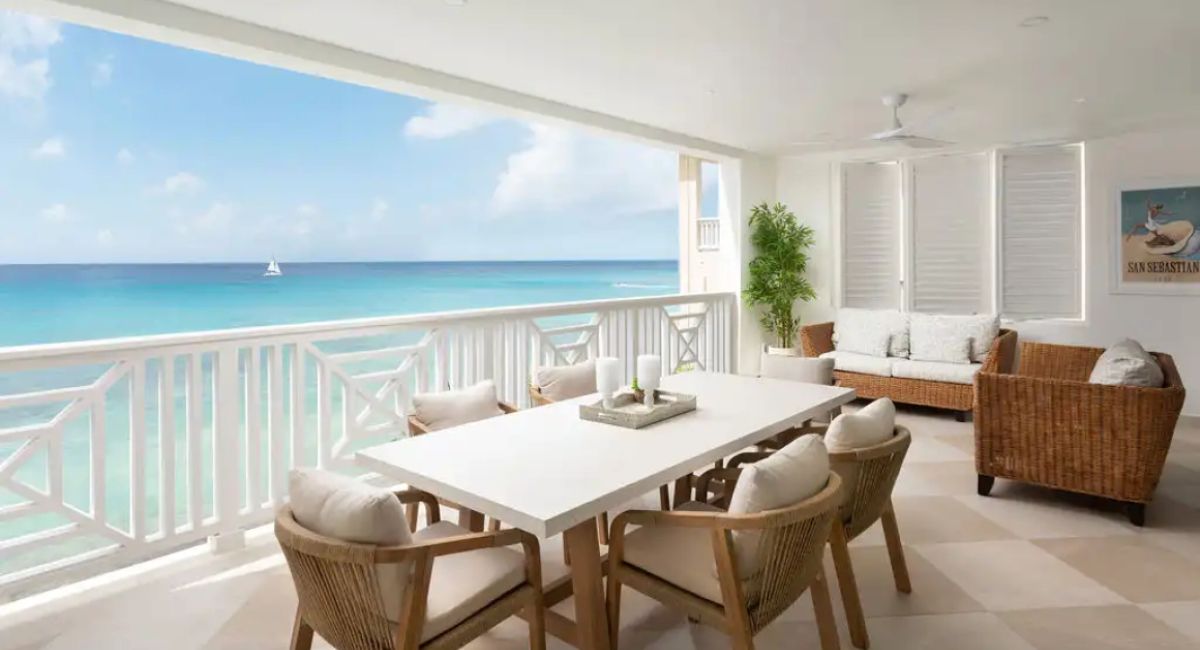
What Are the Real Costs That Reduce Your Net Yield?
Real ownership costs include management fees, land tax, insurance, maintenance, and community-specific charges. Understanding these is the difference between a realistic investment model and a marketing brochure.Management fees
For self-managed properties, professional management typically costs 8–12% of rental income, with 8–10% being the average. This covers tenant sourcing, check-in/check-out, cleaning coordination, and basic maintenance oversight. Setup fees range from US$50–300 per property, and leasing fees may add 25–100% of the first month's rent.For condo-hotel properties, management costs are built into the revenue split. At The Sands, the 47.5% management share covers resort operations, marketing, distribution, housekeeping, and guest services — there's no separate management invoice.Land tax
Barbados land tax operates on a tiered system based on improved property value (land plus structures):- First BDS$400,000 / US$200,000: 0%
- BDS$400,001–450,000 / US$200,001–225,000: 0.1%
- BDS$450,001–850,000 / US$225,001–425,000: 0.7%
- Above BDS$850,000 / US$425,000: 1.0%
Insurance and maintenance
Property insurance costs vary by location, construction type, and hurricane exposure, but should be budgeted as a material annual expense. Maintenance reserves follow the 1% rule: allocate 1% of property value annually for ongoing maintenance, rising to 2–3% for older properties.For condo-hotel properties, the FF&E reserve (5% at The Sands) covers furniture and fixture replacement. For self-managed properties, this cost sits with the owner.HOA and club memberships
Community-specific fees vary significantly. Apes Hill's US$20,000 annual membership is the highest published figure among the resort communities covered here. Condominium HOA fees, where applicable, cover shared amenities, security, and common-area maintenance — these vary by development and should be confirmed with the selling agent before any yield calculation.We've watched the South Coast condo-hotel segment grow significantly since 2019, driven by properties like The Sands and O2 offering institutional-grade management to individual investors who don't want to self-manage a Caribbean rental. The appeal is the removal of operational complexity — but the trade-off is that management takes nearly half the revenue.What Tax Advantages Apply to Barbados Rental Income?
Barbados's tax framework is structurally favourable for property investors — no capital gains tax, targeted incentives for tourism properties, and progressive income tax rates with a meaningful exemption threshold.No capital gains tax. Barbados does not tax gains on property sales. An investor who buys at US$300,000 and sells at US$450,000 keeps the full appreciation — a structural advantage for medium-to-long-term holds.Tourism Development Act incentives. The TDA provides three key provisions for qualifying tourism property owners: capital expenditure write-off against revenues for up to fifteen years, 150% deduction on interest paid on property loans, and import duty/VAT/environmental levy exemptions on furniture, fixtures, and building materials. Condo-hotel properties like The Sands, O2, and The Crane may qualify — but individual eligibility depends on ownership structure and should be confirmed with a Barbadian tax adviser.Rental income tax. Barbados taxes rental income on a progressive basis. The first BDS$25,000 / US$12,500 is a personal allowance (taxed at 0%). Income from BDS$25,001 to BDS$75,000 is taxed at 11.5%, and income above BDS$75,000 at 27.5%. Non-residents are taxed on Barbados-source income only. Residential rental is exempt from the 17.5% VAT.Property transfer costs. When purchasing, property transfer tax (2.5%) and stamp duty (1%) are paid by the seller. Buyer-side costs are legal fees (1–2% plus 17.5% VAT) and Central Bank foreign exchange registration. See our guide on the Barbados property buying process for the full step-by-step.Buyers should engage a qualified Barbadian attorney and financial adviser early. The tax position varies by residency status, ownership structure (personal vs offshore company), and property type — there is no universal answer.Which Resort Communities Offer the Strongest Rental Potential?
Each community serves a different investor profile. The right choice depends on your capital, desired involvement level, risk tolerance, and whether you prioritise income predictability or upside potential.South Coast condo-hotels
The Sands — Studios from ~US$273,000 / BDS$546,000. The lowest beachfront condo-hotel entry point on the South Coast. Published 47.5% owner revenue share. Three months personal use. Managed by Mango Bay Group. Best for: first-time Caribbean investors seeking accessible entry with transparent, hands-off income.O2 Beach Club — One-bedroom from ~US$426,000 / BDS$852,000. Two ownership models (condo-hotel or freehold). Managed by Ocean Hotels Group, an award-winning operator recognised by TripAdvisor and Travel + Leisure. Six restaurants, Acqua Spa. Best for: investors who want a premium amenity set and the flexibility to choose between managed and self-directed rental.East Coast resort
The Crane — Studios from US$349,000 (Phase 4, delivering 2028). Guaranteed annual returns for the first four years. Freehold, no usage restrictions. Five-pool resort complex, on-site village. Best for: investors comfortable with a new-build timeline who value guaranteed initial returns and a heritage resort brand.West Coast luxury communities
Royal Westmoreland — Gated golf community with villas and townhouses. Self-managed rental through independent agencies. CMC Global Estates indicates 9.8% gross yield — the highest indicative figure among named Barbados developments. Annual membership applies. Best for: experienced investors with the capital and management appetite to maximise rental income from a premium West Coast address.Apes Hill — Inland golf and beach club. US$200,000 initiation fee, US$20,000 annual membership. Design-build lots and turnkey villas. Two golf courses, performance centre, beach club. Best for: lifestyle-oriented investors who prioritise the club experience and accept that rental income is secondary to capital appreciation and personal use.Port Ferdinand — West Coast marina residences with yacht club, 1–3 bedroom villas. Resort-managed rental option. Best for: ultra-high-net-worth buyers drawn to marina living and the Platinum Coast positioning.St Peters Bay — West Coast beachfront apartments (3-bed from US$1,600,000). Concierge and property management services. Best for: buyers seeking a premium West Coast beachfront address with rental potential supported by on-site management.All pricing reflects listings current as of July 2026 and should be confirmed directly with the selling agent. For a broader view of investing in Barbados luxury real estate, see our dedicated investment guide. Ready to explore investment opportunities in Barbados? Browse available properties or speak with our advisory team to discuss your requirements. Considering specific developments? Explore The Sands, O2 Beach Club, The Crane, Royal Westmoreland, or Apes Hill.About This Guide
This guide was produced by the Residence Barbados editorial team to help prospective investors evaluate rental income potential across Barbados's resort communities. Primary sources include the Barbados Tourism Investment Inc. Tourism Development Act reference and the Barbados Revenue Authority land tax schedule. Secondary sources include Airbtics' Barbados Airbnb market data (revenue, occupancy, ADR), HOPE Research Group's Caribbean hotel occupancy analysis, Chestertons' 2026 Barbados Real Estate Investment Guide, CMC Global Estates' rental yield analysis, Caribbean Mag and Barbados Today for 2025 tourism statistics, and NVEST Estates for development-specific data. All pricing reflects listings current as of July 2026 and should be confirmed directly with the selling agent. Yield figures are indicative and based on published market data — actual returns depend on property, management quality, occupancy, and market conditions. Tax information should be verified with a qualified Barbadian attorney before making any purchase decision.© 2026 Residence Barbados. This content is provided for general informational purposes only and does not constitute legal, financial, or tax advice. Property laws, tax rates, fees and exemptions in Barbados may change. Rental yield figures are indicative and based on published market data — actual returns depend on property selection, management quality, occupancy, and market conditions. Always consult a qualified Barbadian attorney and independent financial advisor before making any property purchase or investment decision.