Quick Summary:
Barbados has a well-established healthcare system combining a public network centred on Queen Elizabeth Hospital and a private sector widely used by expats and international residents. Most long-stay property owners rely on private clinics for routine care because of shorter wait times and easier access to doctors. Commonly used facilities include Bayview Hospital in St Michael, Sandy Crest Medical Centre in Holetown, and FMH Emergency Medical Clinic in St Michael. Typical private GP consultations range from USD 80–150. Private health insurance is strongly recommended and may be required for certain visas, such as the Barbados Welcome Stamp. For complex treatment, referral abroad is sometimes necessary, which makes medical evacuation coverage an important part of expat insurance planning.
What Is Healthcare Like in Barbados for Expats?
If you are considering a move to Barbados, healthcare is likely one of the first questions you will want answered, particularly for retirees, families, and long-stay property owners planning to spend substantial time on the island. It is also one of the key issues to understand early, alongside residency, schooling, taxation, and the property buying process.
The reassuring answer is that Barbados offers a healthcare system that supports most day-to-day medical needs well, with a private sector that is widely used by expats and international residents. The key is preparation. If you understand how the public and private systems differ, how insurance works, and which parts of the island offer the easiest access to medical facilities, you will be in a much stronger position to plan confidently.
For a broader view of the buying journey, including location strategy and long-term relocation planning, see our legal guide to buying property in Barbados.
Public vs Private Healthcare in Barbados
Barbados operates on a two-tier healthcare system made up of a public sector and a private sector. Both play an important role, but for most international residents, the private system is the one that matters most in day-to-day practical terms.
The Public Healthcare System
The public healthcare system is administered by the Ministry of Health and Wellness. Its main hospital is Queen Elizabeth Hospital (QEH) in Bridgetown, which provides emergency care, surgery, maternity services, oncology, cardiology, and a range of specialist outpatient services. Government polyclinics across the island also provide primary care, chronic disease support, vaccinations, and routine services.
For expats and non-citizens, the public system is best understood as an important safety net rather than the main route for ongoing care. Emergency treatment may be available, but access to routine public healthcare is more limited for foreign nationals who do not have the relevant residency status or qualifying entitlements.
In practical terms, most international property owners and long-stay residents do not plan around the public system for regular healthcare needs.
The Private Healthcare System
The private sector is where most expats, retirees, and international residents receive everyday medical care in Barbados.
Private healthcare generally offers:
- shorter waiting times
- easier access to GPs
- more predictable appointment scheduling
- better continuity of care
- easier coordination for insurance-backed treatment
For buyers from the UK, US, or Canada, this is usually the most useful way to think about healthcare in Barbados: public care exists, but private care is the system you are most likely to use in practice.

What Private Hospitals and Clinics Are Available in Barbados?
Barbados has a number of private medical facilities used regularly by expats and international residents. The strongest concentration is on the West Coast and in the Bridgetown area.
Bayview Hospital — St Michael
Bayview Hospital is one of the island’s best-known private hospitals, located just outside Bridgetown in St Michael. It is commonly used for emergency care, inpatient treatment, surgery, and specialist referrals. For international residents who want access to a more traditional private hospital setting, Bayview is often an important part of the healthcare picture.
Sandy Crest Medical Centre — Holetown, St James
Sandy Crest Medical Centre is one of the most familiar private facilities for West Coast residents. It offers GP services, walk-in urgent care, minor procedures, and diagnostics. For buyers living in or near Holetown, this is one of the most convenient facilities for routine care.
FMH Emergency Medical Clinic — St Michael
FMH Emergency Medical Clinic is another commonly used private clinic serving expats and long-stay residents. It offers GP care, specialist consultations, diagnostics, physiotherapy, and broader multi-disciplinary support.
Dental and Optical Care
Private dental and optical care are also readily available in Barbados, especially in the main residential and commercial hubs used by expats. If you’re planning longer stays in Barbados, it’s wise to include access to dental and optical services in the same planning process as GP registration and insurance.
Urgent Care Clinics
In addition to the facilities above, Barbados has a growing number of urgent care clinics that provide walk-in treatment for minor illnesses, injuries, and immediate medical needs.
Urgent Care — Highway 5, Boarded Hall, Christ Church
Urgent Care Barbados offers accessible walk-in treatment for a range of minor illnesses and injuries, making it a practical option for day-to-day urgent medical needs.
Emergent Care Clinic of Bridgetown — St Michael
Located along the Errol Barrow Highway, this clinic provides urgent and emergent care services with a focus on fast access and efficient treatment.
Urgent Care — Welches, St Thomas (coming soon)
A new urgent care facility is expected to open in Welches, St Thomas, further expanding access to walk-in care across the island.
What Standard of Healthcare Can Expats Expect in Barbados?
If you are considering a move to Barbados, this question often sits behind everything else: How does healthcare compare to what you are used to at home?
The reassuring reality is that Barbados offers a well-established healthcare system, with private medical services that comfortably support the majority of everyday and ongoing health needs.
Private clinics and hospitals commonly provide:
- GP consultations
- routine diagnostics
- preventive care
- prescription management
- common chronic condition support
- minor urgent care
- dental and optical care
- physiotherapy and rehabilitation
- some specialist consultations and procedures
For most residents and international homeowners, this level of care comfortably supports the majority of everyday medical needs.
Where Barbados differs slightly from larger countries such as the United States, Canada, or the United Kingdom is simply the scale of specialist services. As a small island nation, it doesn’t have the same breadth of sub-specialist departments found in major metropolitan hospital networks.
In rare cases requiring highly specialized treatment, patients may be referred to larger medical centers abroad — a common approach across many island destinations.
A Note for UK Buyers
British buyers sometimes assume there may still be reciprocal healthcare arrangements in place, and that should not be relied upon. Private insurance planning remains essential, and this should be factored into relocation decisions from the outset. If you are moving from Britain, our guide to moving to Barbados from the UK covers wider practical planning in more detail.
Do You Need Private Health Insurance to Live in Barbados?

In most cases, private health insurance should be treated as a core part of relocation planning. While it is not universally required by law for all visa categories, it is a practical and financial necessity rather than an optional extra.
Requirements by Visa:
- Barbados Welcome Stamp: proof of health insurance is typically required as part of the application.
- SERP and other long-stay routes: health insurance is a formal requirement for SERP applicants, with specified minimum coverage levels (for example, at least US$375,000 for applicants under 60 and US$500,000 for those over 60). For other long-stay routes, requirements may vary, but private insurance remains essential in practice because routine public healthcare access for non-citizens is limited.
- Non-resident property owners on shorter stays: comprehensive travel insurance with strong medical cover is still advisable for every visit.
If you are planning to work remotely from Barbados, our guide to working remotely from Barbados covers the Welcome Stamp route in more detail.
Types of Coverage Expats Commonly Use
International Private Medical Insurance (IPMI)
This is usually the most suitable option for long-stay residents and retirees. These policies can provide regional or worldwide coverage, access to private facilities in Barbados, and coverage for treatment abroad where needed.
Regional Caribbean Plans
Some residents prefer regional plans focused on care within Barbados or the wider Caribbean. These may be more cost-effective in some cases, though the exact suitability depends on age, medical history, and whether referral abroad is likely to be important.
Travel Insurance
Travel insurance may be sufficient for shorter visits, but it is not a substitute for proper long-term healthcare planning if you are planning to spend extended periods of time on the island.
Medical Evacuation Coverage Matters
One of the most important parts of any expat health insurance plan is medical evacuation coverage. For complex procedures, advanced oncology, neurosurgery, certain cardiac interventions, or other highly specialised treatment, referral abroad may be necessary. Many international residents plan around the possibility of treatment in Miami, New York, London, or Toronto.
For that reason, medevac coverage should not be treated as optional. It is one of the most important financial safeguards for long-stay residents in Barbados.
What Should You Organise Before You Arrive?
Preparation makes a significant difference to the overall healthcare experience in Barbados. If you organise the practical basics in advance, the transition to living in Barbados is usually much smoother.
Secure Appropriate Insurance Before Departure
Arrange comprehensive health cover before you move or begin your long stay. Review:
- inpatient limits
- outpatient coverage
- chronic condition exclusions
- excess levels
- medical evacuation terms
- geographical treatment coverage
Obtain a Medical Summary From Your Current GP
Bring a full medical summary that includes:
- prescriptions
- chronic conditions
- allergies
- vaccination history
- recent test results where relevant
This can make registration with a doctor in Barbados much easier.
Bring an Adequate Supply of Medication
If you rely on specific medication, it is wise to arrive with a sensible supply and confirm local availability in advance. Common medications are generally available in Barbados, but niche or highly specialised prescriptions may require extra planning.
Register With a GP or Private Facility Early
One of the simplest but most useful things you can do after arrival is register with a private clinic rather than waiting until you need urgent care.
In practical terms, this usually means:
- choosing the clinic most convenient to your home
- bringing your passport and insurance documents
- providing your medical history
- completing registration forms as a private patient
For those living on the West Coast, Sandy Crest Medical Centre is often among the most convenient options. For those closer to Bridgetown, Bayview Hospital and FMH Emergency Medical Clinic are also well-placed for registration and ongoing care.
Check Dental and Optical Needs Before Moving
Many people relocating to Barbados also choose to complete pending dental or optical work before moving, then use Barbados for routine follow-up care thereafter.
How Does Healthcare Proximity Affect Property Location Decisions?
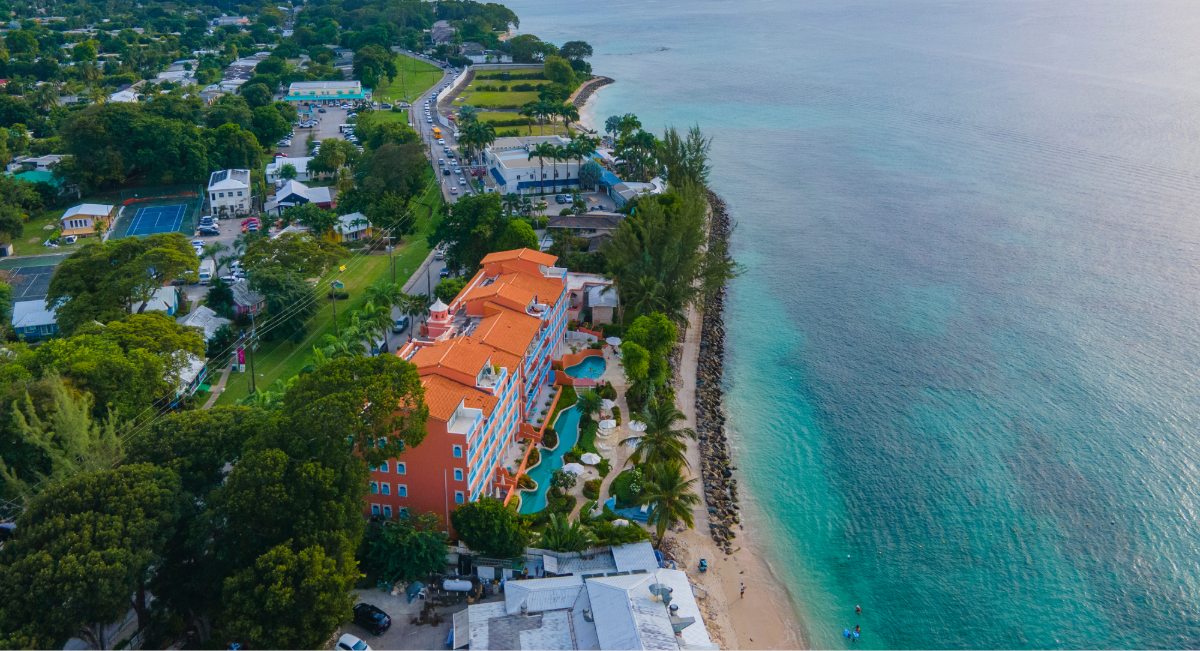
Healthcare may not determine your purchase on its own, but it often influences where you decide to buy, particularly if you are planning a long stay, retiring, or relocating with family.
For those prioritising proximity to private care, the West Coast is often the most practical part of the island.
Why the West Coast Appeals to Long-Stay Buyers
St James and nearby parts of St Peter offer some of the easiest access to private healthcare facilities used by expats. Holetown in particular sits close to Sandy Crest Medical Centre and within easy reach of FMH Emergency Medical Clinic and other day-to-day services.
That convenience matters. Even if you are currently in good health, it is reassuring to know that GP care, urgent treatment, dental care, and diagnostics are within a straightforward drive from home.
Area-by-Area Practicality
- Holetown, St James: strongest access to West Coast private healthcare facilities
- Sandy Lane / Paynes Bay: very convenient for clinics in Holetown and nearby
- Speightstown, St Peter: still reasonably well placed, though with slightly longer travel times
- South Coast: workable access to Bridgetown-based facilities, but less concentrated for West Coast-style private healthcare convenience
- East Coast / inland areas: buyers should plan more carefully around travel times and emergency access
For many full-time or extended-stay buyers, this is one reason the West Coast remains so attractive. Our guide to life on the West Coast of Barbados explores that wider lifestyle picture in more detail, including schools, amenities, and neighbourhood character.
How Does Residency Status Affect Healthcare in Barbados?
Healthcare access in Barbados can vary depending on your immigration status. Buyers should consider healthcare planning alongside property plans rather than treating it as a separate issue later.
Welcome Stamp Holders
The Barbados Welcome Stamp is designed for temporary remote living. Private insurance is a key part of the route, and practical healthcare access is usually through the private sector.
SERP and Other Long-Stay Residency Routes
Longer-term residents may have a different relationship with healthcare access depending on their status and how long they have been resident. Even so, most expats and international property owners still rely primarily on private healthcare and maintain private insurance.
Non-Resident Property Owners
Owners who are not resident in Barbados but stay regularly should still plan carefully. Emergency care may be available when needed, but that is not the same as having a structured healthcare plan in place for repeat or ongoing care.
If you are comparing longer-term living options, our residency and visa guide will help place healthcare planning in the wider context of relocation.
What Does Private Healthcare Cost in Barbados?
Costs vary by provider and level of care, but the following ranges are useful for planning purposes.
Typical Private Healthcare Costs
| Service | Approximate Cost |
| Private GP consultation | USD 80-150 |
| Specialist consultation | USD 150-300+ |
| Routine blood tests or diagnostics | USD 100-300 |
| X-ray imaging | USD 150-250 |
| MRI scan | USD 600–1,200+ |
| Minor urgent care or procedure | USD 200-600 |
| Private inpatient hospital stay | USD 750-1,500+ per night (higher for complex care) |
| Dental check-up and clean | USD 100-200 |
| Annual international private medical insurance premium | Approx. USD 2,500-8,000+ depending on age, medical history and level of coverage |
| Medical evacuation | USD 15,000-80,000+ depending on destination and circumstances |
These figures are indicative only, but they are enough to show why insurance planning is so important for international residents.
What Role Does Healthcare Play in Property Decisions?
For serious buyers, healthcare is not just a lifestyle topic. It is part of the decision-making framework that shapes where to buy, how long to stay, and how well a property will support future needs.
If you are choosing between inland, East Coast, South Coast, and West Coast locations, healthcare convenience can become an important part of the decision.
That is especially true for:
- retirees
- couples planning extended stays
- buyers with pre-existing health concerns
- families relocating with older relatives
- owners intending to transition from holiday use to long-stay living later
This is why thorough preparation always leads to better outcomes. The most successful relocations involve thinking beyond the legal process and property price. They also think about healthcare, insurance, location, schools, and long-term practical fit.
If that broader planning is part of your move, Residence Barbados can introduce you to relevant professionals as part of the overall purchase process, including appropriate contacts for healthcare and insurance planning. For a wider overview of the relocation and buying journey, register to receive your free copy of the Barbados Property Buyer’s Guide.
Ready to Plan Your Move Thoughtfully?
If you are considering Barbados for relocation or long-stay ownership, healthcare should sit alongside location, residency, and buying strategy in your planning. A well-informed decision is rarely based on property alone.
For buyers who take the time to understand the full picture, Barbados offers a lifestyle that is both relaxed and practical for long-term living.
If you’d like guidance on choosing the right location and property for convenience, lifestyle, and long-term liveability, contact Residence Barbados today.
This article is published for general informational purposes only and does not constitute medical, legal, financial, or professional advice. While every effort has been made to ensure accuracy at the time of writing, healthcare costs, insurance requirements, visa conditions, and regulations may change. This content is not a substitute for professional medical advice, diagnosis, or treatment. Property markets, transaction processes, and regulations vary by jurisdiction and are subject to change. Readers are encouraged to consult qualified professionals for guidance specific to their circumstances.
Frequently Asked Questions About Healthcare in Barbados
Is healthcare good in Barbados for expats?
For most everyday needs, yes. Healthcare in Barbados for expats is generally reliable, particularly through the private healthcare system used by most international residents. Private clinics provide GP care, diagnostics, routine treatment, chronic condition management, dental care, and minor urgent care.
Do I need private health insurance to live in Barbados?
Yes, in most cases private health insurance is strongly recommended for expats living in Barbados. It may be formally required for some visa routes, and even where it is not explicitly mandated, it is strongly recommended because most expats rely on private healthcare and may need coverage for specialist treatment or medical evacuation.
Can I access public healthcare as a foreign national in Barbados?
Emergency treatment may be available, but routine public healthcare access is more limited for foreign nationals who are not citizens or qualifying residents. Most international residents therefore use the private healthcare system for regular care.
What happens if I need specialist treatment not available in Barbados?
Your doctor will usually refer you onward, and depending on the condition, treatment may take place abroad. This is why medical evacuation coverage is such an important part of expat health insurance.
Which areas of Barbados have the best access to private medical facilities?
The West Coast of Barbados, particularly Holetown and the wider St James area, offers some of the easiest access to private healthcare facilities used by expats, including Sandy Crest Medical Centre and FMH Emergency Medical Clinic.