A brief summary:
The Barbados property market in 2026 is a seller’s market driven by sustained foreign demand and limited inventory, but it is not a bubble. Here is what the data shows:
- Sales volumes rose approximately 75% between 2023 and 2025, with over half of transactions closing at or above asking price
- Luxury West Coast prices climbed 5–8% year-on-year; mid-range properties gained 3–5%
- No capital gains tax, no inheritance tax, and no wealth tax — Barbados remains one of the Caribbean’s most tax-efficient jurisdictions for property investors
- The affordable segment (under US$500,000) faces a widening supply gap as construction costs rise
- The Barbados Estate Agents and Valuers Association (BEAVA) describes the current cycle as a “tight rational market” settling into steady growth, not a speculative spike
Is the Barbados property market still growing in 2026-2027?
Barbados property sales are growing — and at a pace that has surprised even local agents. Sales volumes have risen sharply since 2023, with foreign buyer demand from the US, UK, and Canada climbing year-on-year. A significant share of recent sales have closed at or above asking price, a pattern more commonly associated with London or Toronto than a Caribbean island of 281,000 people.
What is driving demand?
Three forces are converging. The first is the Welcome Stamp programme, launched during COVID and now firmly embedded in Barbados’s appeal. Remote workers who trialled a year on the island during 2020–2022 are returning as buyers. The second is Barbados’s tax structure: no capital gains tax, no inheritance tax, no wealth tax, and an annual land tax assessed on improved value with a top marginal rate of 1% for higher-value residential properties. The third is infrastructure confidence — six major hotel projects are adding approximately 1,500 rooms with a cumulative investment of around BDS$1.8 billion (approximately US$900 million), signalling long-term institutional commitment.
The Central Bank of Barbados forecasts GDP growth of 2–3% for 2026, underpinned by tourism and construction activity.
Where does the market sit in its cycle?
Chris Hassell, president of the Barbados Estate Agents and Valuers Association (BEAVA), described the current market in July 2026 as “somewhere in the middle of the cycle, settling into steady growth rather than a runaway spike.” In conversations with buyers relocating to the West Coast, we’ve consistently heard the same reading — strong demand, but disciplined pricing. Hassell characterised it as a “tight rational market rather than a speculative bubble”.
What do properties actually cost across Barbados right now?
As of July 2026, Barbados property prices vary dramatically by coast, property type, and proximity to the water. Luxury beachfront villas on the West Coast (the Platinum Coast) start above US$1 million, with prime stock trading well above that. Entry-level condominiums on the South Coast generally start from the mid-US$300,000s, based on our team’s current market activity. Prime residential land in sought-after parishes trades from roughly US$500 per square foot upward.
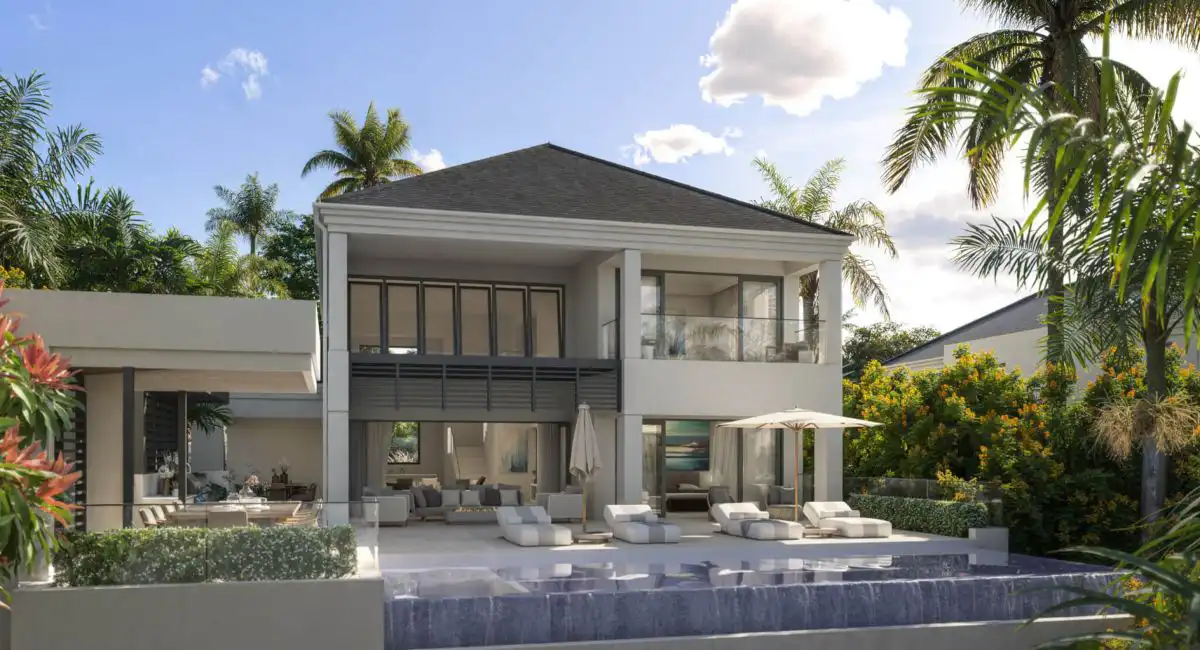
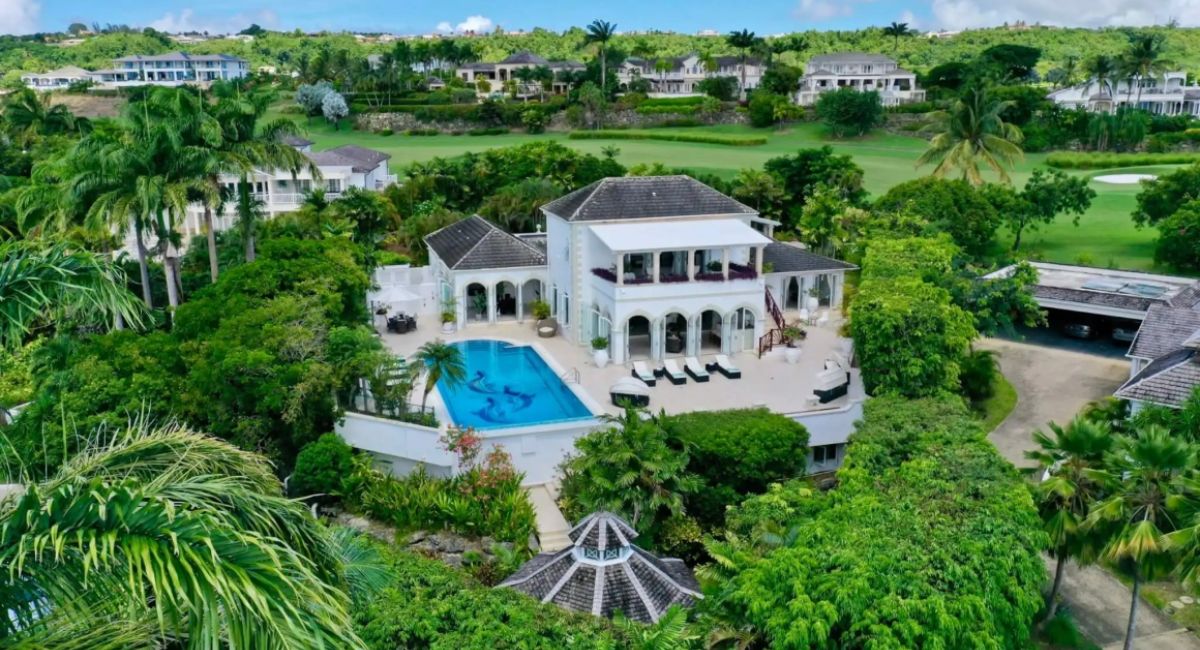 Source – Mango Walk n Royal Westmoreland
West Coast — the Platinum Coast
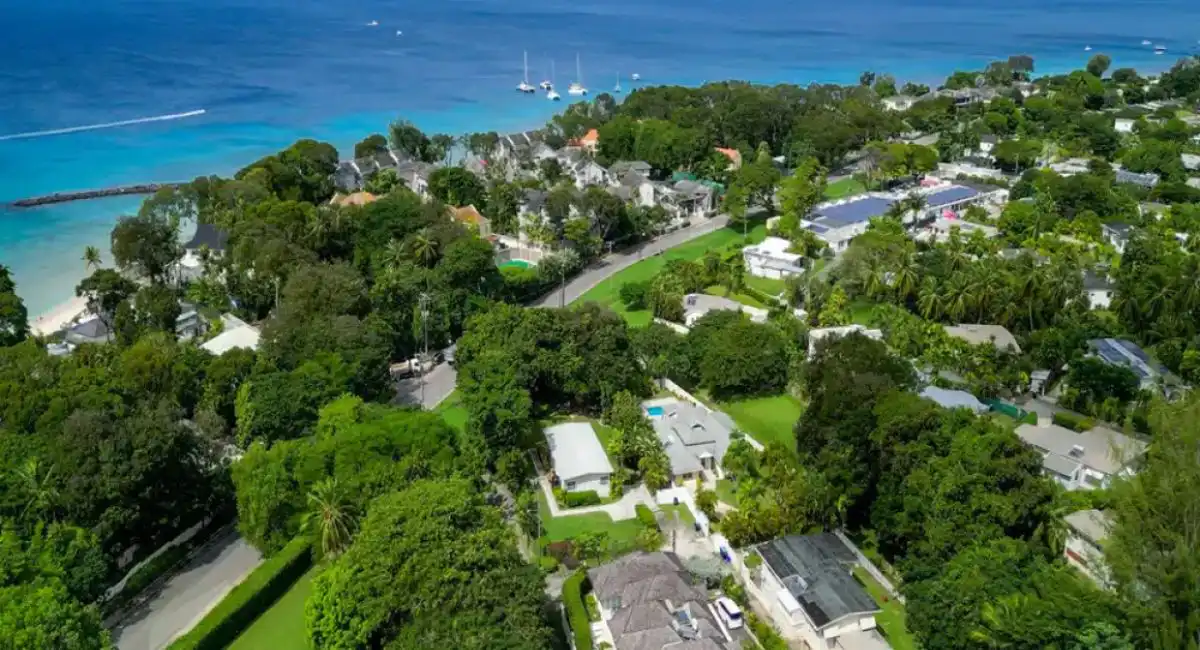
The West Coast parishes of St James and St Peter remain the premium market. As of July 2026, luxury properties here have seen 5–8% price appreciation year-on-year, driven by a limited supply of beachfront land and sustained international demand. uper-prime villas in Sandy Lane and surrounding estates regularly trade above US$5 million — the trophy segment has seen “more sales than in the history of Barbados” in recent years, according to industry leaders quoted by Barbados Today. The Crane Private Residences on the South-East coast offer an alternative luxury entry point, with Phase 4 pre-construction units starting from US$399,000 for studio residences.
For a deeper look at what makes the West Coast distinctive for property owners, see our guide to West Coast Barbados lifestyle.
South Coast — the mid-range opportunity
The South Coast offers stronger value for investors targeting the rental market. Properties here typically trade below equivalent West Coast stock, and the proximity to Bridgetown, the airport, and the Oistins dining scene appeals to long-term renters and Welcome Stamp holders. Mid-range apartments in Christ Church and St Michael parishes list at around US$350,000 and US$600,000. Explore the South Coast Barbados area for neighbourhood-level detail.
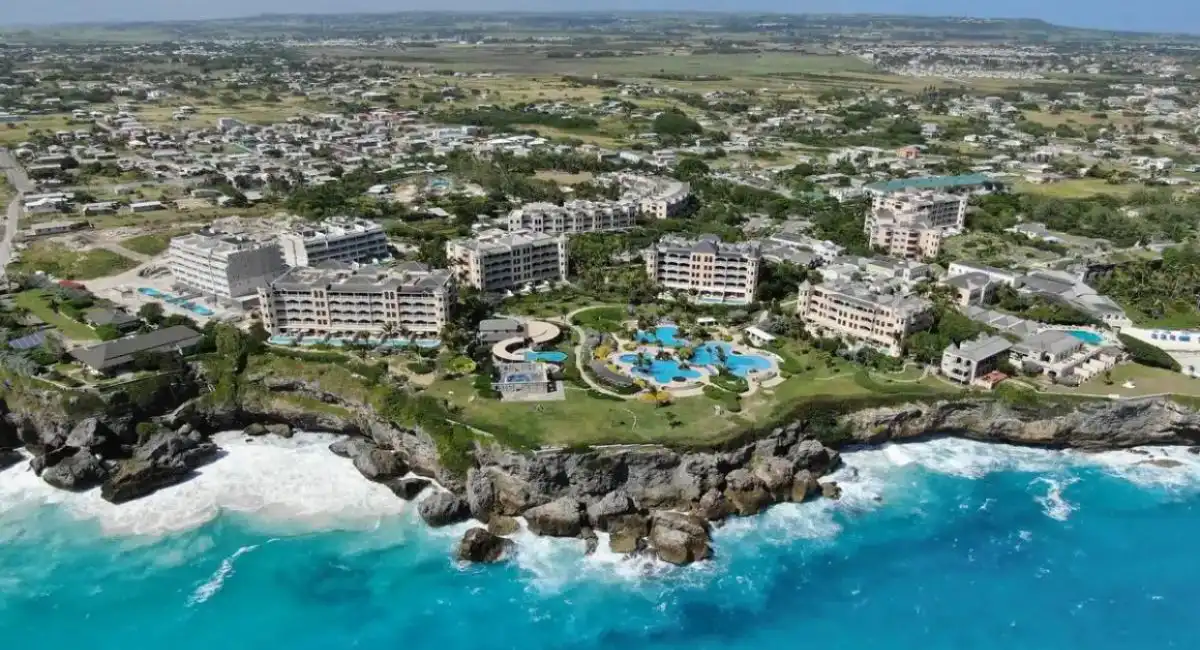
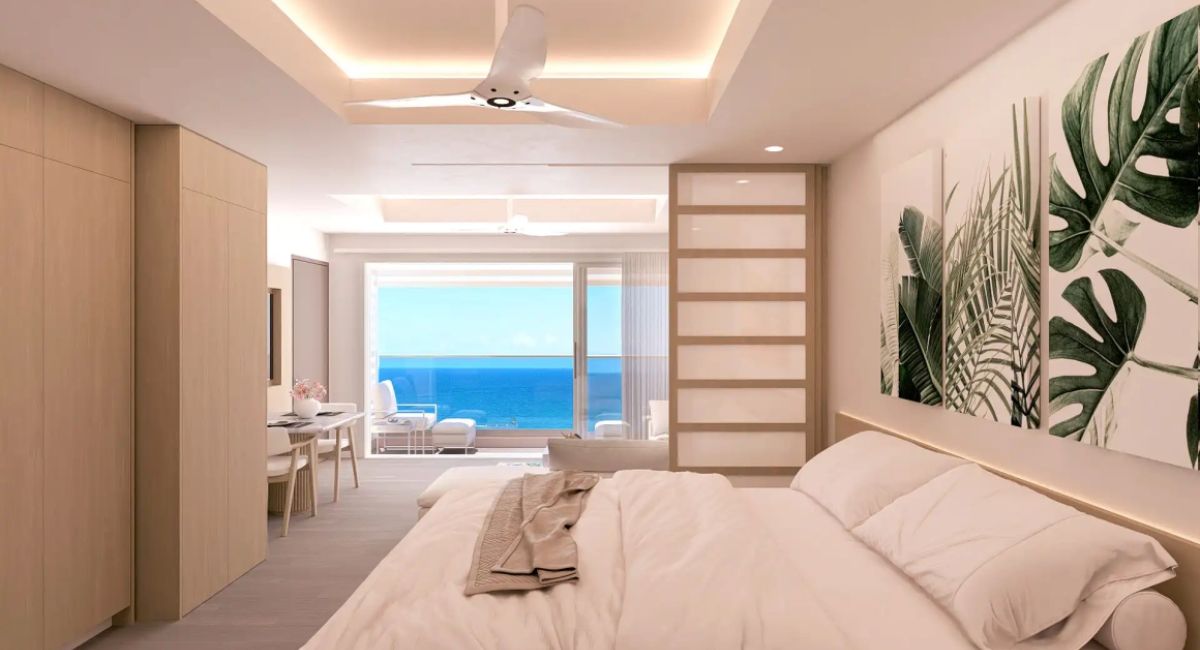 Source – Studios at The Crane Private Residences
The affordable supply gap
One pattern BEAVA flagged in July 2026 deserves attention: the affordable segment is thinning. Construction costs have risen significantly, squeezing supply in the US$250,000–$500,000 band where domestic Barbadian demand is strongest. Agents we work with report that properties priced under US$500,000 now attract multiple offers within the first week of listing. For renters, the shortage is equally acute — demand for homes in the US$750–$1,250 per month range far outstrips what is currently available.
What rental yields can investors expect?
Short-term villa rentals on the West Coast can generate gross yields of up to 8% annually for well-managed properties, with short-term rental revenue across Barbados rising roughly 15% year-on-year as of early 2026. Properties in managed resort communities (where marketing, housekeeping, and maintenance are handled in-house) tend to outperform standalone rentals.
Long-term rental yields are lower in percentage terms — typically 4–6% — but offer steadier, year-round income without the seasonality and management intensity of vacation lets. The tightest supply-demand imbalance sits in the US$750–$1,250 per month band, which means well-priced long-term rental units in that range face minimal vacancy.
For investors weighing the purchase decision against rental income potential, our guide to investing in luxury Barbados real estate covers the financial modelling in more detail.
Can foreigners buy property in Barbados, and what are the hidden costs?
Foreigners can purchase property in Barbados without restriction. There are no foreign-ownership caps, no residency requirements, and no reciprocity conditions. The process itself, however, has friction points that catch international buyers off guard.
The Central Bank registration requirement
Every foreign buyer must register the purchase funds with the Central Bank of Barbados under the Exchange Control Act. This is not optional. Without registration, you lose the legal right to repatriate the proceeds when you eventually sell — a risk that is difficult to reverse after the fact. We’ve watched the transaction timeline frustrate foreign buyers who expect London or Toronto closing speeds — Barbados operates on a different clock, and building that into your planning is essential. Hassell confirmed in his July 2026 remarks that “the time it takes to close a transaction in Barbados — even under perfect conditions — remains a genuine shock compared with other markets”.
For a full walkthrough of the legal steps, see our legal process for buying property in Barbados.
What does the buyer actually pay?
As of July 2026, the buyer’s direct costs are relatively modest compared to many jurisdictions:
- Legal fees: 1–2.5% of the purchase price, plus 17.5% VAT on the legal fees
- Stamp duty (1%) and Property Transfer Tax (2.5%): these are the seller’s obligations under Barbadian law, not the buyer’s — a distinction many guides get wrong
- Land tax: annual, assessed on improved value on a banded scale with a top marginal rate of 1% for higher-value residential properties, capped at BDS$100,000 per year
- Title registration: a one-off administrative cost
The first BDS$150,000 (approximately US$75,000) of any property transfer is exempt from transfer tax, which benefits buyers indirectly by reducing the seller’s cost and improving negotiating flexibility.
For a detailed look at the pitfalls international buyers encounter, read our guide to common mistakes when buying property in Barbados.
What risks should buyers watch for in this market?
No market report is complete without a candid look at friction. BEAVA’s July 2026 commentary highlighted three risks that buyers — particularly those purchasing from abroad — should factor into their planning.
Transaction timeline shock
Barbadian property transactions involve Central Bank registration, title searches (some properties lack registered title, relying instead on common-law title), and town-planning approvals. Even under ideal conditions, closings take materially longer than in the UK, Canada, or the United States. Buyers who secure a mortgage certificate should also be aware that “too often a buyer holds a mortgage certificate believing they qualify for a certain amount, finds their ideal home, and then — after enhanced due diligence and full disclosure — doesn’t qualify for as much, and the sale falls through”.
Unlicensed real estate operators
BEAVA has raised concerns about “unlicensed, unregulated persons practising real estate as a secondary income,” with two recent fraud incidents cited in the Barbados Today report. Working with a BEAVA-registered agent — or an independent buyer’s advisor like Residence Barbados — reduces this risk.
Sales data opacity
Barbados lacks a centralised MLS or public sales registry. As Hassell noted, “without reliable, shared sales figures, it is difficult for agents and valuers to find good comparables”. This makes independent valuation advice essential, particularly for buyers unfamiliar with the market. Our guide on how to choose your Barbados real estate agent explains what to look for.
Ready to explore the Barbados property market with current, independent advice? Speak with our advisory team or browse available properties to see what aligns with your investment criteria.
About this guide
This market report draws primarily on the Barbados Estate Agents and Valuers Association (BEAVA) president Chris Hassell’s market commentary published by Barbados Today on 6 July 2026, supplemented by Chestertons’ 2026 Barbados Real Estate Investment Guide, the Central Bank of Barbados GDP outlook (updated April 2026), and Barbados Revealed’s tax and fee documentation. Residence Barbados is an independent buyer’s advisory service based in Barbados; the observations attributed to “we” and “our team” reflect the editorial team’s direct experience advising international buyers.
All prices and fees are stated as of July 2026 and should be independently verified before any purchase decision.
© 2026 Residence Barbados. This content is provided for general informational purposes only and does not constitute legal, financial, or tax advice. Property laws, tax rates, fees and exemptions in Barbados may change. Always consult a qualified Barbadian attorney and independent financial advisor before making any property purchase or investment decision.
Frequently asked questions
Can a UK citizen buy a house in Barbados?
Yes. British citizens can buy property in Barbados without restriction. There are no foreign-ownership limits, no reciprocity requirements, and no residency conditions attached to the purchase. The key procedural step is registering the purchase funds with the Central Bank of Barbados under the Exchange Control Act, which preserves your legal right to repatriate sale proceeds in the future.
Is buying a house in Barbados a good investment?
Barbados offers a combination that few Caribbean markets match: no capital gains tax, no inheritance tax, gross rental yields of up to 8% on well-managed West Coast short-term lets, and a market that BEAVA describes as settling into steady growth rather than speculation. The tax efficiency, combined with year-round tourism demand, makes it a strong proposition — provided buyers account for transaction timelines and the affordable-segment supply constraints.
How long can you stay in Barbados if you own property?
Property ownership alone does not grant residency rights. Most Western nationals — including British, American, and Canadian citizens — can stay up to six months without a visa under Barbados’s visa-free entry arrangements. For longer stays, the Welcome Stamp program offers a 12-month remote-work visa, and the Special Entry and Reside Permit (SERP) provides a renewable five-year pathway for qualifying applicants. Property ownership strengthens a SERP application but is not the only qualifying criterion. See our guide to the legal buying process for detail on residency pathways.
What taxes do property owners pay in Barbados?
Annual land tax, assessed on improved value, is the primary ongoing obligation — charged on a banded scale with a top marginal rate of 1% for higher-value residential properties, capped at BDS$100,000 per year. Rental income earned in Barbados is subject to income tax. There is no capital gains tax, no inheritance tax, and no wealth tax. As of July 2026, the property transfer tax (2.5%) and stamp duty (1%) are seller-paid obligations, not buyer costs.
How long does it take to close a property purchase in Barbados?
Expect three to six months from accepted offer to completion under normal conditions, and longer if the property lacks registered title or if Central Bank registration encounters delays. BEAVA’s president flagged in July 2026 that transaction timelines remain “a genuine shock” for foreign buyers accustomed to faster markets. Building in a realistic closing window — and securing full mortgage approval (not just a certificate) before committing — is essential.